I am going to nerd out for a few sentences. If you are not a finance, stock market, or economics nerd, do not read this.
Have a cup of coffee or send a snapchat to your boyfriend or girlfriend, a tasteful one.
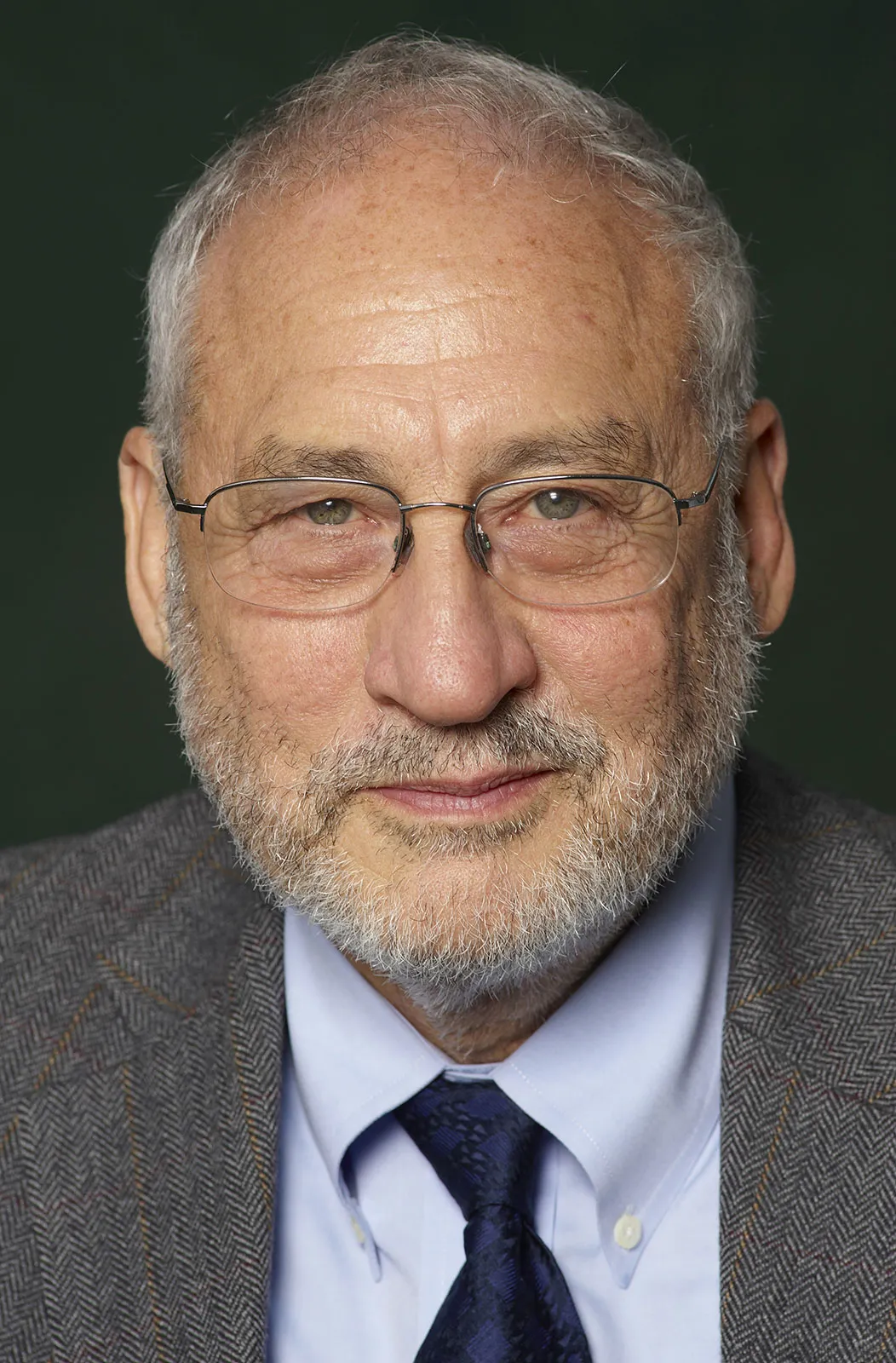
I do not hear much about uber economist Joe Stiglitz these days, maybe because he is old.
However, he is the partial creator of the The Grossman-Stiglitz Paradox which proves that a perfectly efficient financial market is logically impossible.
“The paradox states that if stock prices always perfectly reflected all available information, no one would have an incentive to spend time or money uncovering that information, causing the system to collapse.”
With BlackRock recording more records into passive index funds, are we getting closer to a tipping point? Can passive keep piggybacking?
I’ve been busy enjoying the warm weather, spending time with family and friends, and making the most of the long days. But, as the saying goes, all good things must come to an end. 🙁
I had a great time on my trips to California and Northern Michigan. I felt lucky to get out to see some fantastic places and meet some great people. Although, I wish I had the chance to get out of the country. Maybe next year!
In July, my nephew Perry was visiting my parents in the Traverse City area. We’ve been coming up to the area since I was very young. My late grandmother had a summer home in the area since the 1970s.
On Saturday, a very hungry and enthusiastic Perry, grabs his cheeseburger and the relish. After he puts the burger down on the table, he squeezes the relish so hard he shoots 1/4 of the bottle all over his plate. He is immediately upset. Before he started yelling, I said to him
“Do you know that you can learn something from that relish mess?”
He giggles.
“Everyday traders make their money from squeezes, just like you squeezed the relish bottle and everything came out”.
He doesn’t get it, but I tried.
“Do you know what the stock market is?”.
“No”.
“Do you know what corn is?”
“Yes”
“The price of corn goes up and down because of squeezes”. “Small squeezes move the market a little bit, and the large squeezes move the market a lot.”
“When you squeeze the relish so hard it shoots out everywhere, you’ve created a huge squeeze.” He giggles.
What are the most significant squeezes? The tail events. They bring the gobs of unwanted relish on the unsuspecting as they are forced to sell or cover at bad prices.
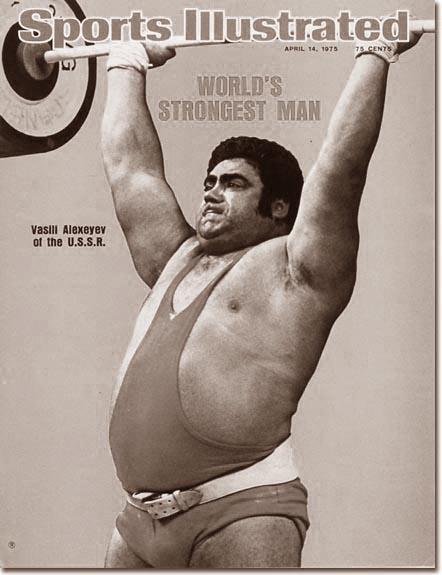
I am not going to lie; I am strong for my age group.
Last year, I hoisted 225lbs over my head while performing the strict press. My body weight was 226lbs at the time.
This link to video on X (formerly Twitter) is the proof.
I have always been motivated to work out and stay healthy. I think it is because I subconsciously know that a healthy body leads to a healthy mind and a longer life. Plus, it doesn’t hurt to see yourself looking good in the mirror!
The human body is an amazing and complex machine, with different parts interacting with each other in ways that we never would have dreamed of decades ago. Bones can affect the mind due to the billions of genes that interact together. This is just one example of how complex the human body is.
It is very hard to look at almost anything in isolation anymore.
It is clear that the stock market is not determined by a single player, but rather by the collective action of millions of investors who set prices and direct trillions of dollars in investments around the world.
The parts make up a whole.
Now, I know some of you who have been nice enough to take the time to read some of my other posts know that I am interested in tail hedging.
We also need to think about the body when we think about the tails. Just like when my body communicates to my mind when I press 225lbs over my head.. The body and the tails are interconnected. You cannot understand one without the other.
Understanding their relationships is the key to understanding a successful tail hedging strategy.
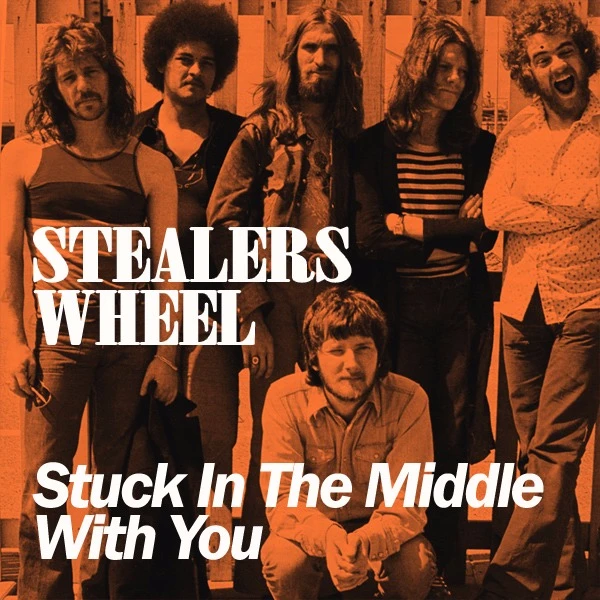
Why can’t I get the song “Stuck in the Middle With You” by the band Stealers Wheel out of my head? I wasn’t even around when it was popular, and I don’t enjoy the rest of the band’s music, but it still hums in the back of my mind during the trading day.
It has a lot to do with tail hedging.
Skilled option traders select trades based on market conditions. If implied volatility is depressed, calendar spreads have a good risk reward payoff. If implied volatility is expensive, a butterfly spread might make sense.
Placing bets on tails, the large and rare moves in the market, require strategies that are a little more complex than simple butterflies or calendar spreads.
Why?
This gets back to my Stuck in the Middle with You affliction. The stock market has a lot of quiet times, it’s stuck in the middle a lot. Large movements in prices are rare. In fact, the Covid 19 crash was one of the few large price movements in history.
So, to be successful in tail hedging, we need to have a strategy that acknowledges the quiet times, the stuck in the middle times, and the rare times when the market has enormous price movement.
If this was a Stealers Wheels song, this might be called “Moving Rapidly Away From the Middle With You”.
A few weeks ago, I saw an interesting statistic on a football player from the Chicago Bears and I realized that it could teach a lesson for tail hedgers. I know not everyone is interested in American football, but being from Chicago, football is something that I cannot ignore. Hopefully, using sports as a metaphor will be a little more exciting than the usual tail hedge terminology. Which, quite frankly, is kind of boring.
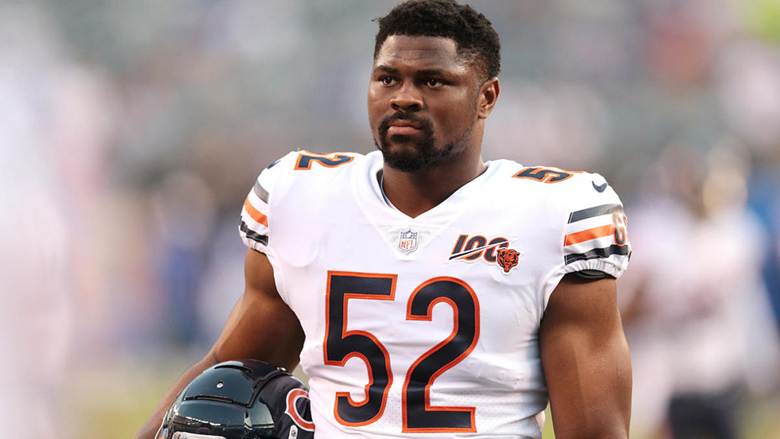
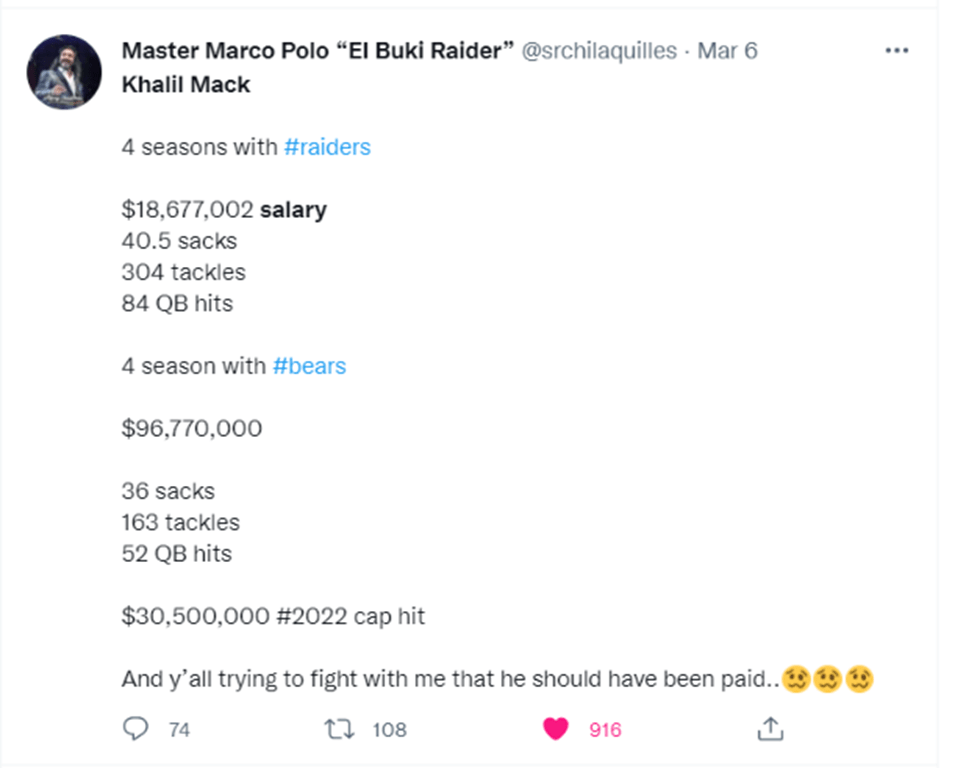
Khalil Mack, a defensive end, was drafted in 2014 by the Oakland Raiders. He played four seasons of outstanding football and became a well-respected player.
In 2018, the hapless Chicago Bears decided to sign Mack to a much larger contract. Unfortunately, they ended up not getting much in return.
What mistake did the Chicago Bears make? They overpaid for the same performance! Mr Mack did not exceed his previous level of play in Oakland.
I am not trying to play Monday morning quarterback. Selecting the proper players and building a winning team is not easy, unless you are the New England Patriots. However, perhaps the Bears might have asked themselves whether paying five times the old contract was worth it.
Overpaying for tail hedges or any option for that matter can hurt just like overpaying for defensive ends. That is why we are trying to hedge when prices are cheap and no one is demanding our hedges.
Rising prices for protection do not guarantee that you will lose money, you just have less room for error and need future performance to exceed expectations. If Khalil Mack exceeded his performance with the Raiders while he was with the Bears, his contract would have looked less ridiculous.
Buying a tail option for a moderately high price might turn out ok if the market has a large crash. The Expectation of future performance would be closer to realized performance. Similar to realized versus implied volatility. A subject for another post!
Price always matters. The cure can be worse than the disease. For the Chicago Bears, passing on Mack might have cost them nothing. Passing on an expensive hedge because it is too late might make more sense than overpaying.
Best,
James
PS- The Bears never made the playoffs with Mack. Two losses in the wildcard round.
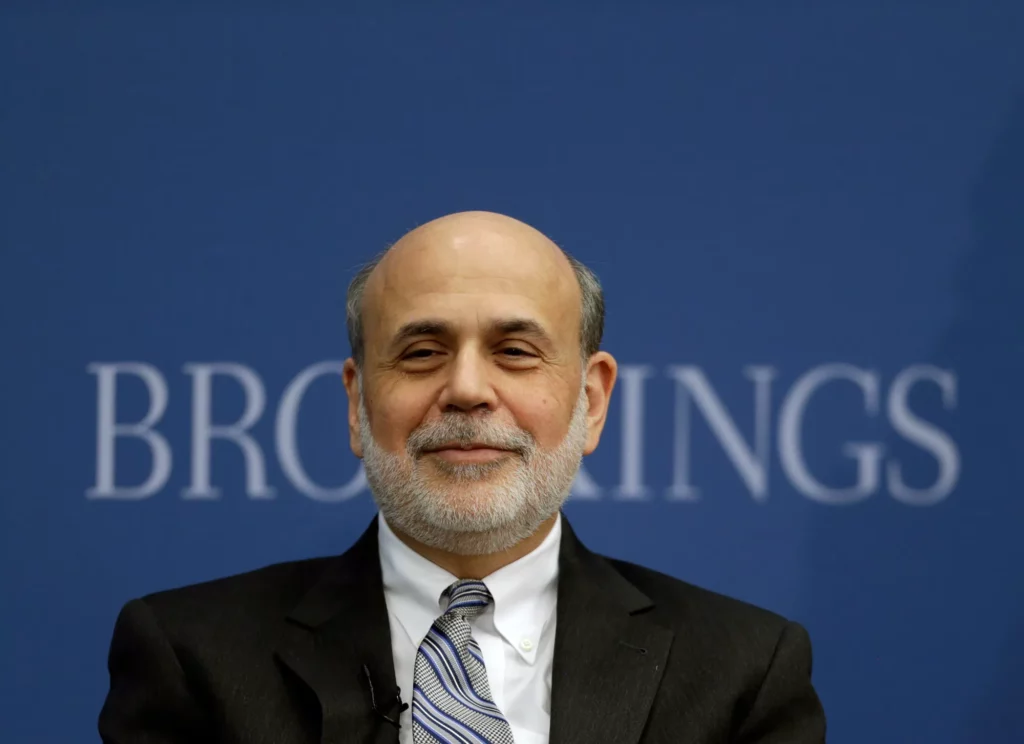
Ben Bernanke needs to feel like his life means something—contributed to society in some important way. Making significant contributions to the evolution of new tools of monetary policy lets him leave a mark. There is nothing unusual about this need because it is felt by many people, but perhaps not with the same intensity as Dr. Bernanke.
Monetary policy in the 21st century covers the important central bankers in the period — Arthur Burns, Paul Volker, and Alan Greenspan — and their approaches to combating problems with the US economy.
Bernanke is clear that those managing the Federal Reserve are getting better at using monetary policy to produce positive outcomes. The new tools of quantitative easing and forward guidance should be part of fixing the economy during downturns. Unfortunately, there is very little evidence that monetary policy makes much difference to the overall prosperity of a country.
Ultra-low interest rates inflated house prices and risk-taking by banks ultimately culminated in the biggest banking blowup since the 1930s in 2008. Bernanke explicitly denies that monetary policy had anything to do with it; he has no idea that debt and risk were building up as interest rates went lower and lower since Volcker slayed inflation in the late 1970s.
There’s no evidence that debt-based growth works. Today, we have much more debt but in different places.
Bernanke lays out the major themes of the book in the beginning with a thesis. New policies have been undertaken by the Federal Reserve because of new economic developments in the 21st century: “The first of these developments is the ongoing change in the behavior of inflation and, in particular, its relationship to employment’.
The former Fed chairman is referring to the Phillips curve, which proposes a relationship between unemployment and inflation. The simplest form of this relationship is running a regression to show the outcome of lower unemployment is higher inflation. This was the problem in the 1970s, which was much more problematic than most initially thought it would be.
As Bernanke ascended through the banking profession, he no longer believed that inflation and unemployment were strongly linked; instead, he thought employment could be strong without rising inflation.
But in the 1970s, economists did not think that unemployment could rise while inflation continued to remain high and rising. Clearly, the Philips curve is not that reliable. It does not make sense to declare a “new era” that allows ultra-low rates when in the 1970s economists were shocked by the developments.
That’s the first strike against Bernanke.
The second development is “the long-term decline in the normal level of interest rates”. This argument is not substantiated at all. As far as I can tell, Bernanke thinks interest rates will be at zero until humans become extinct. Why will they be low forever? Today, we are close to 6% and Bernanke missed the Covid-19 inflation.
The third part of his thesis is that “final long-term [financial] development is the increased risk of financial instability”. Bernanke believes if the economy has a crisis that the Fed should intervene and can fix problems without any kind of long-term risk. The problem with this idea is that over time, it is like suppressing a large forest fire at the expense of smaller ones or letting a small bridge collapse early with minimal damage. Dr. Bernanke thinks saving the banks saves the economy, but that assumes the banks were not making bad loans to begin with. The loans are still bad.
Jerome Powell borrowed Bernanke’s interventions from the 2008 crisis and ended up with the worst inflation in forty years. The Federal Reserve practically had to be dragged kicking and screaming to raise rates after inflation took off. This terrible mistake has still not been completely fixed.
Bernanke believed that there is no connection between money supply and inflation. Sometimes that might be true, but if I sent every American $20,000 and let them not pay part of their bills for a few years, the odds of inflation would rise. The 2020 monetary policy was a huge failure, which was done partially because of Bernanke’s carelessness about the relationship between money supply and inflation.
After the COVID-19 inflation disaster, experimental monetary policy will undergo much more scrutiny. In the long run, economic growth comes from skilled entrepreneurs using the resources they have in front of them to build something amazing. The cost of capital is only one component. Apple and Microsoft were formed during periods of high cost of capital. We must learn the lessons from the past; we must refuse to trial experimental monetary policy.
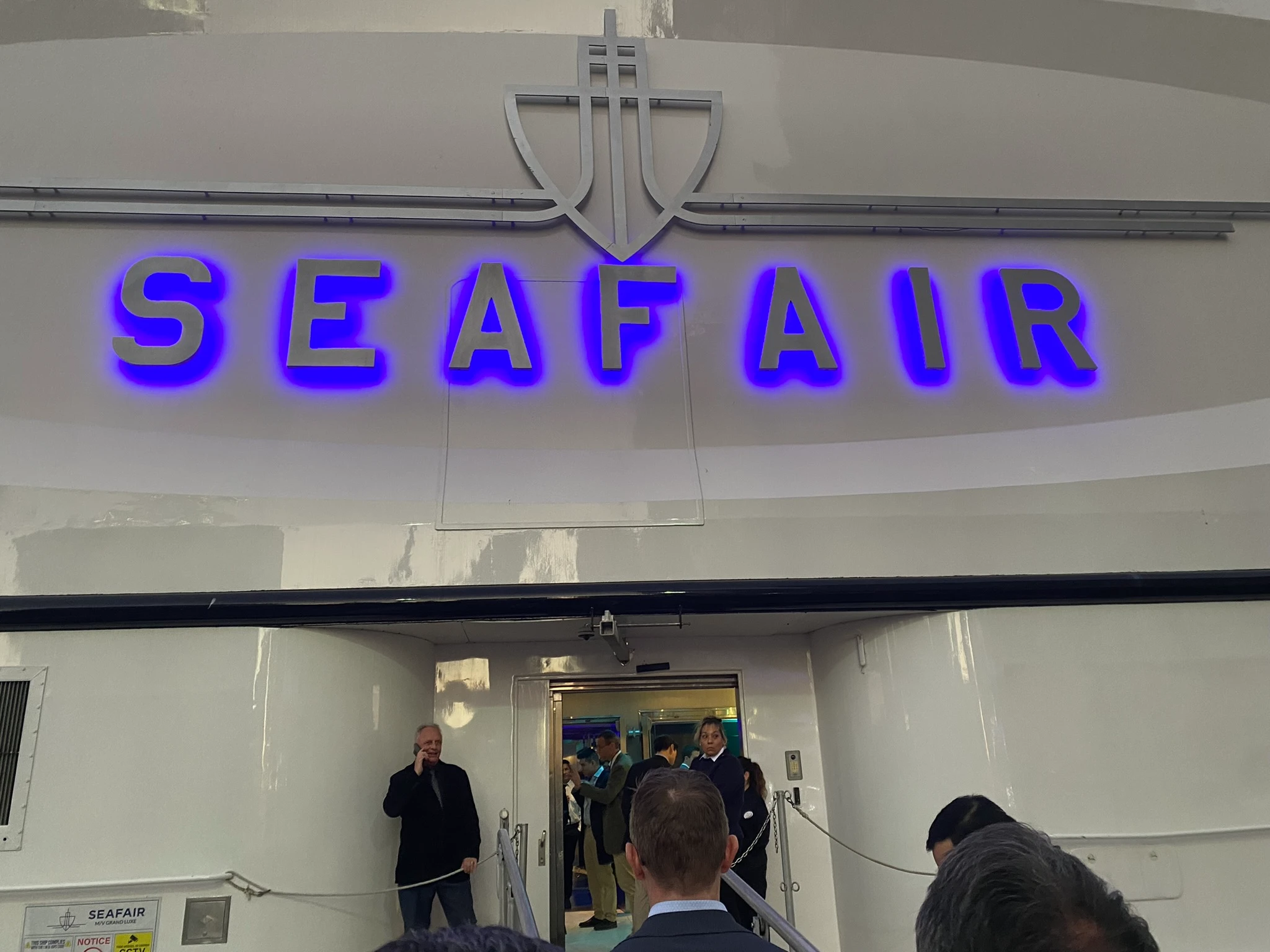
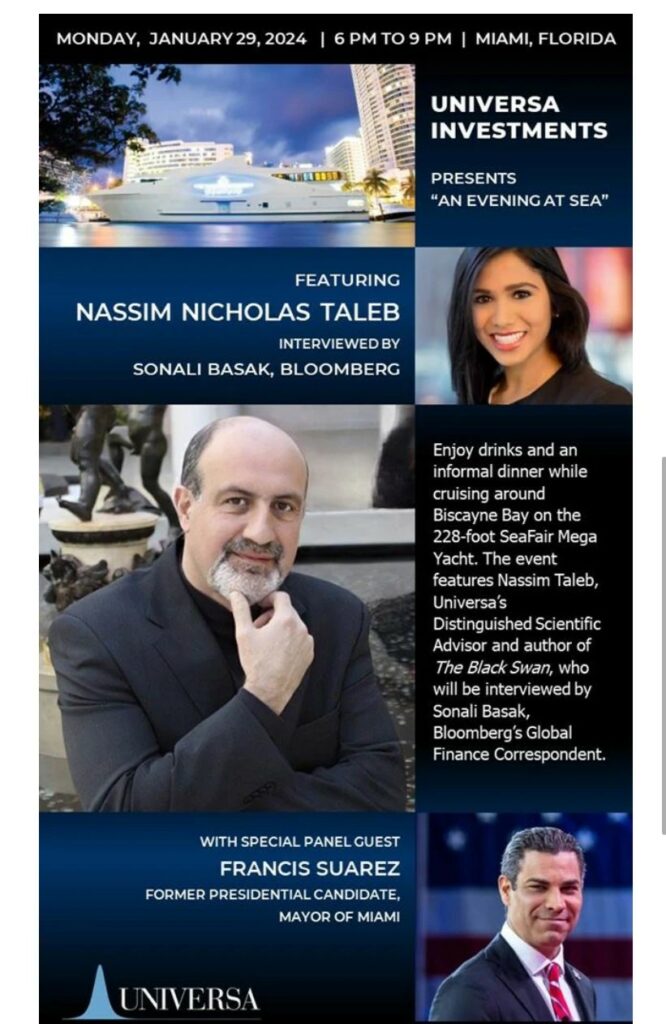
On January 29th in Miami, I had the privilege of attending the second annual Universa Investments boat cruise as a guest of Alex Dancy from Lionscrest Advisors.
The initial discussion took place during the cocktail hour on the splendid deck of the vessel.
The Mayor of Miami, Francis Suarez effectively promoted Miami as a favorable alternative to New York City for finance professionals.
Regrettably, the temperature dropped on the deck, prompting us to relocate to the lower level for dinner earlier than planned.
The cuisine offered was exceptional, featuring a selection of steak, fish, and pasta dishes.
I had conversations with some individuals in the mortgage industry, Nassim Taleb, and the Chief Researcher at Universa, Ronald Lognado.
Mr. Lognado is originally from Illinois, and currently lives near Las Vegas, but is considering moving back to the Midwest. He mentioned staying in touch, and I found that gesture thoughtful.
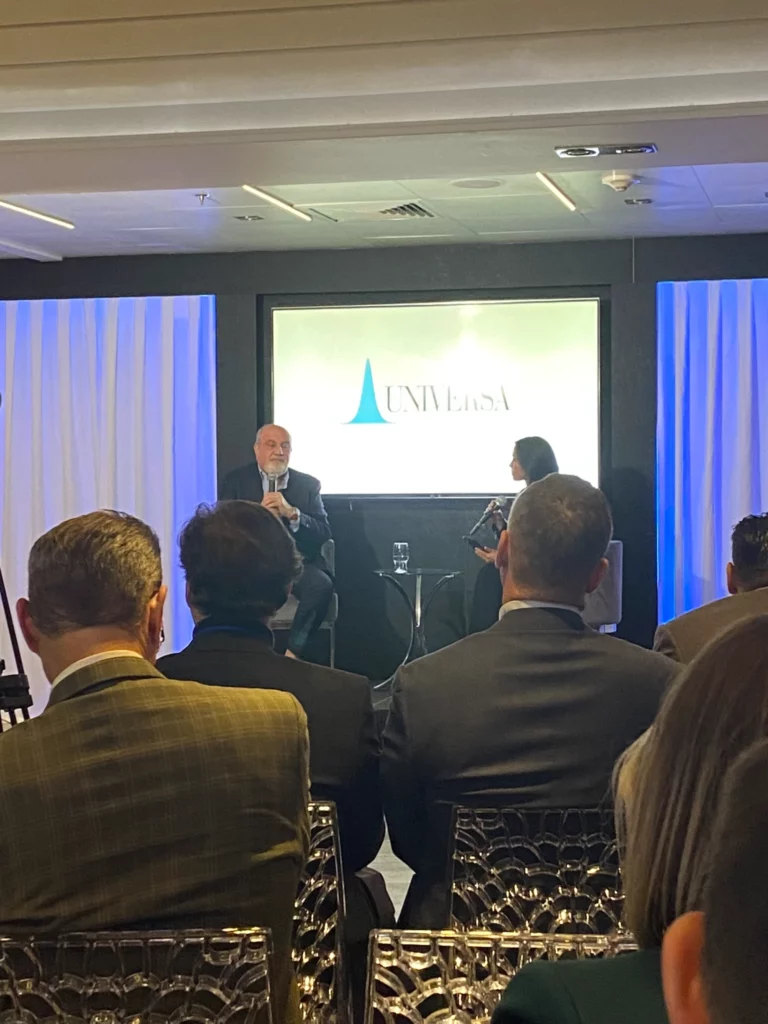
After dinner, Nassim Taleb took to the small stage for an interview with Sonali from Bloomberg News.
The topic was discussing the best places to try squid ink pasta. Just kidding! Nassim is a big fan of squid ink pasta, so I’m eager to give it a try myself.
Sonali had a few questions about the economy and shared his concerns about the risks we are currently facing.
The conversation wasn’t particularly thrilling, but he did express his belief in China’s growing power, which he hadn’t mentioned previously. He also pointed out the US’s significant challenge with budget deficits.
I don’t think Bloomberg was interested in hearing about power law probability distributions or the problem with Value at Risk.
After the presentation, I had a couple of gin and tonics. I stayed until the end, but ended up chatting with another group who invited me to join them at the Sexy Fish restaurant. It was nice to have some company to hang out with after the event.
Thank you to Max for treating us to the drinks.
I stayed in Miami for two additional nights at a hotel located in Coconut Grove.
After spending the afternoon exploring Miami Beach, I decided to stop by a wine bar for the evening. While there, a friendly woman sitting next to me kindly offered to share her risotto. In return, I bought her a glass of wine as a gesture of gratitude.
If I wasn’t significantly younger than her, I might have considered asking for her phone number.
On the last day, I met Iwan Gulenko, a Ukrainian native who was temporarily staying in Miami with his family. We shared a meal of pizza and engaged in a conversation about global current affairs. It was insightful to hear from someone with a firsthand perspective on the complexities between Russia and Ukraine.
Iwan kindly gave me a ride to the airport. If you’re in need of a job, consider reaching out to him as he works as a recruiter. Thank you, Iwan!
A couple of months back I was searching for movies on my Roku and the amazing Netflix algorithm suggested Forrest Gump. Did it know my age? Maybe the “man in his early 40s searching for high school nostalgia” algorithm was running in the background? I would love to know! I saw the film for the first time when it was released in 1994. I was just 14 years old.
I had almost completely forgotten about the film. Other than watching a few scenes while channel surfing, I had not sat down and watched the entire movie in twenty years.
Obviously, a lot has changed in twenty years. I won’t elaborate on the obvious other than to say that I have some gray hair now. What wasn’t obvious to me at age 30, and this I suspect is true for all but a very small amount of young people, is that later in life you have a lot more knowledge and wisdom. Getting a little older indeed does have a few benefits.
So when I sat down to watch Forrest Gump again after all these years, I had over fifteen years of trading experience with options and futures, seen several major and minor crashes, and was much more knowledgeable about market history. I knew the economic and political fallout from the Great Depression, the great inflation of the 1970s, and the crash of 1987.
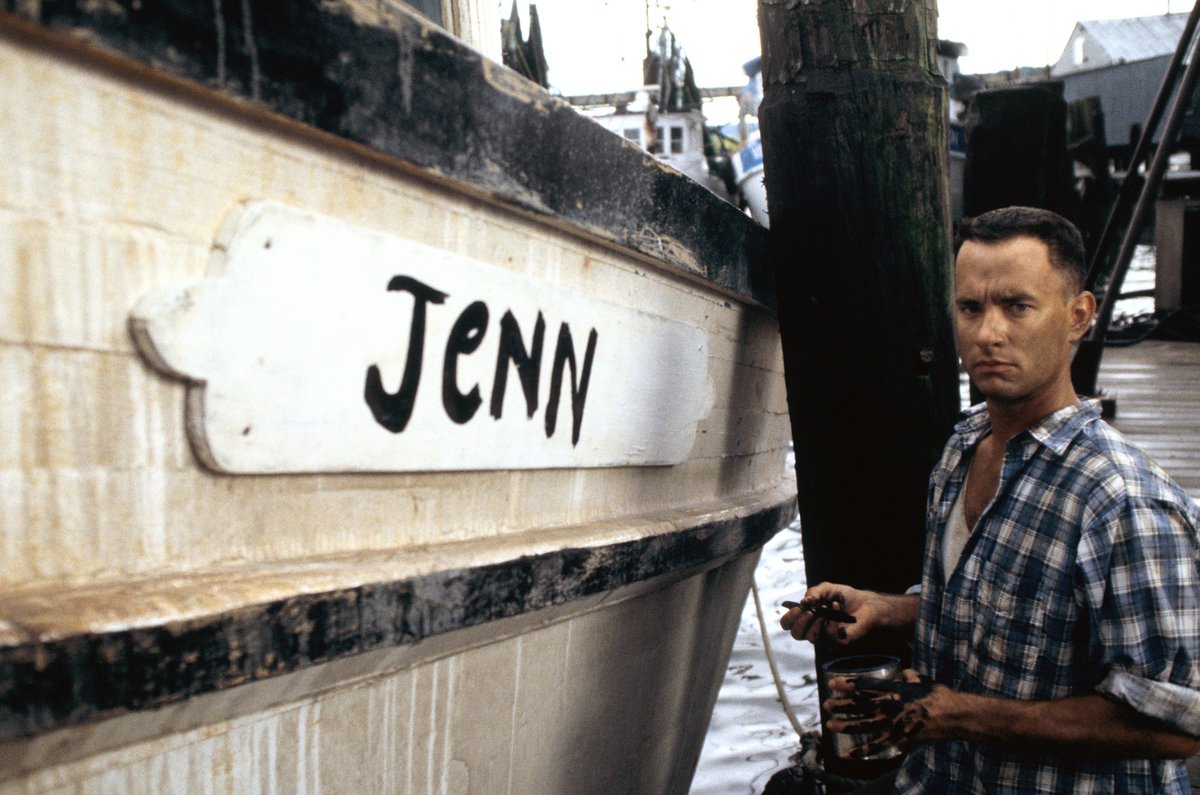
Something began to click when I was watching Forrest and Lieutenant Dan survive the storm of the century on the SS Jenny. The Bubba Gump Shrimp company had just suddenly become fantastically rich because they survived the storm and their competitors were wiped out. If you are the only one left standing after the storm, the profits and riches are easy. The hard part is to survive the storm.
The storm was enough to give Lieutenant Dan a reason to be happy he’s alive and he thanked Gump for saving him. All his new riches were because of Forrest Gump introducing him into this business.
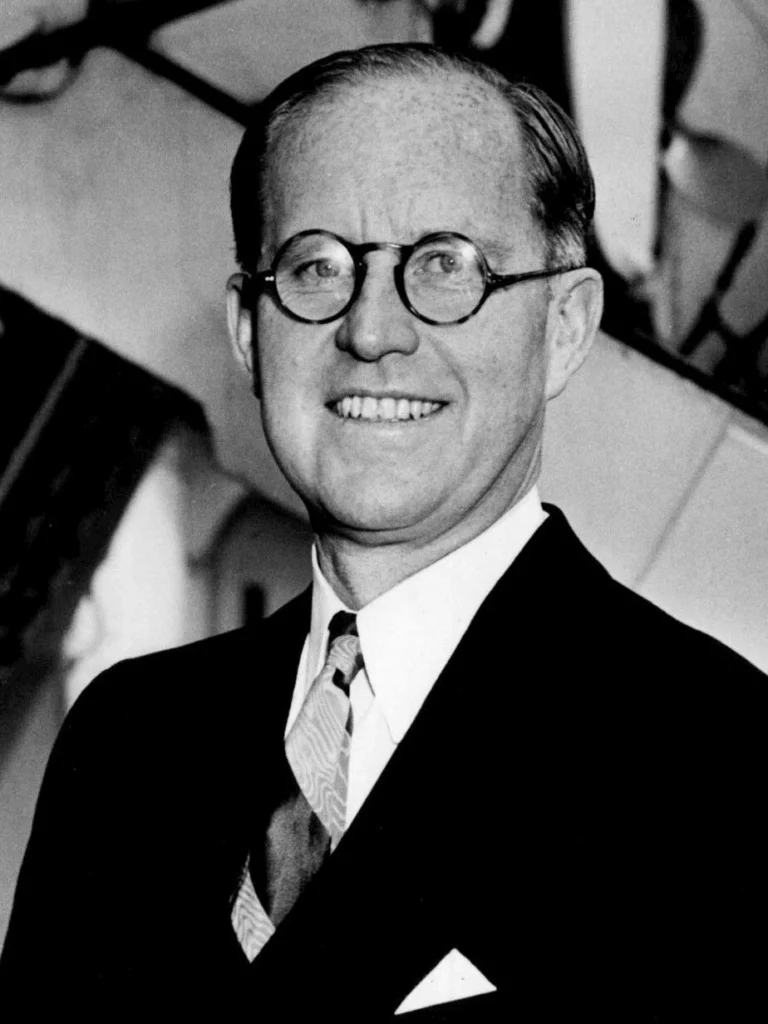
I wish I knew who wrote the scene storm scene. I bet it was someone older who remembered that some of the great fortunes were made during the Great Depression because those who had cash could buy from their bankrupt competitors. This was how Joe Kennedy became rich.
Forrest didn’t have a plan to survive the storm. I think we can say that he was not a true tail risk hedger! And the storm scene is almost an anachronism because today very few are interested in insuring against remote or tail risks. But an ounce of prevention can go a long way to preserving and even growing your wealth. The Bubba Gump Shrimp Company becomes a massive business with narrow chances of becoming what it had now become.
Being able to buy stocks, bonds, or real estate when they are cheap is a tremendous advantage. An advantage not everyone is able to get their hands on. That is what we are trying to accomplish with tail risk protection. Protection against loss-making events and maintaining participation in those which are profit-making is the key. Profits from rare episodes like the global financial crisis can go a long way just as surviving the storm did for Forrest Gump and Lieutenant Dan.
Bubba Gump Shrimp Company had a low probability of being successful as in Forrest Gump’s initial startup in the shrimping business wasn’t as prolific but just because he survived the storm his business grew beyond expectations. As commonly said, “Storms don’t last forever, the sun always shines again but brighter.”
Best,
James.
PS– “In order succeed you must first survive” – Warren Buffet
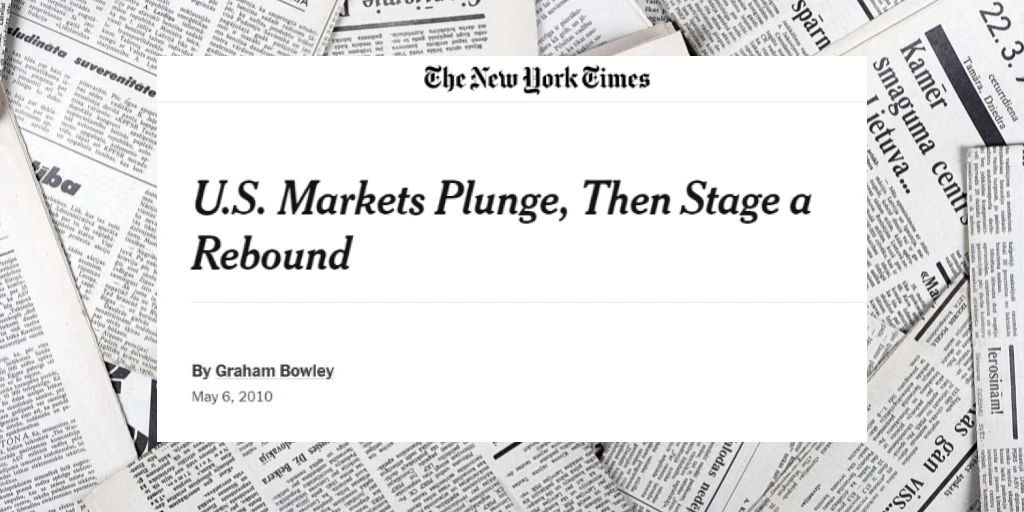
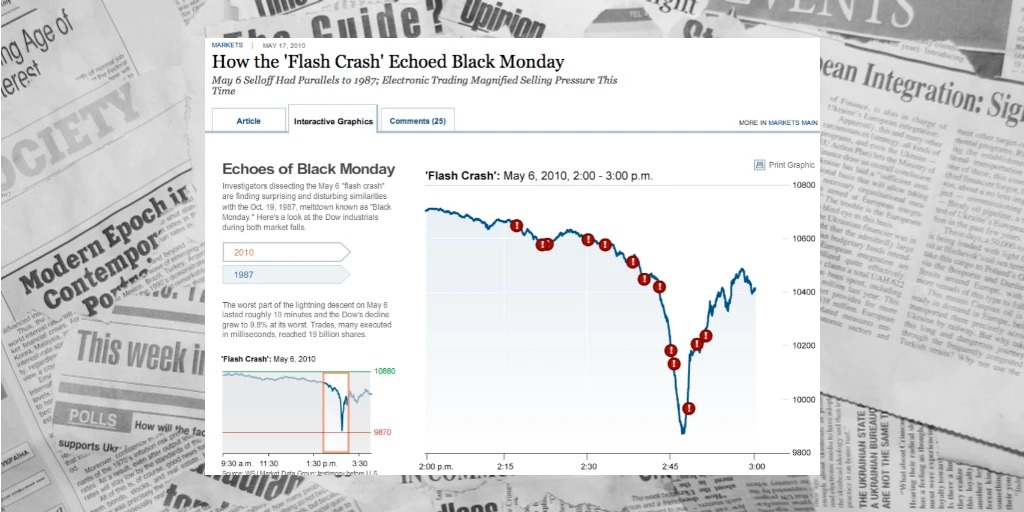
Two and a half weeks before the infamous flash crash of May 10, 2010, I opened my first options trading account with Think or Swim. My knowledge of options was limited, but I had years of experience trading futures as a member of the Chicago Board of Trade, now known as the CME group.
I only put a small amount of money in the new options account. I was a beginner, and I knew I needed to go slow. It turned out that I probably should have gone even slower because I ended up purchasing options that had a very low likelihood of paying off. The options were inexpensive, far out of the money put options. They are designed to pay off if the market goes down by a large amount.
Unfortunately, markets rarely have large declines and that is why the far out of the money options cost very small amounts.
The day before the Flash Crash, I purchased 1200 puts for .02 cents. I had no idea what I was doing. I only had a vague understanding that if the market went down, it would produce profits from the puts.
The next day, around 2pm Chicago time, the US stock market began to drift steadily low. But this was far from unusual until all of a sudden, the market broke down completely.
I was sitting in a small office in the building that used to house the Chicago Board of Trade. I watched the market drift lower until suddenly all of the bids and offers on the screen disappeared. There was no market! Prices were plummeting so quickly that no one would post a bid.
I looked at my new Think or Swim account. The profit and loss (PNL) was showing my gain for the day at $3,400,000.00! The tiny .02 puts had gone up several thousand times their original value.
The market was near to closing and I was convinced it would close on the lows. Turns out, this was the most expensive mistake of my entire career. Suddenly, the market found buyers and staged a furious comeback. It was down over 10% at the peak.
I watched most of the 3,400,000 million disappear, but I did sell for close to $50,000.
It was a painful lesson, and it is hard to avoid the “if I had only” trap when I think about that day. However, I did learn a powerful lesson. Options can deliver rare, but fantastic gains. Mathematically, this is called convexity. Out of the money options have extreme convexity.